
Understanding the Gut Barrier: Beyond Intestinal Permeability
Written by Dr. Megan Woroch, ND
Naturopathic Doctor in Toronto, Ontario
Published: June 28, 2026 · Updated: September 15, 2026
The digestive tract has one of the body's most important jobs: it must let nutrients enter the bloodstream while preventing unwanted substances from entering circulation.
To do this, the gut relies on multiple protective barriers that separate the contents of the digestive tract, including food particles, bacteria, toxins, and stool, from the immune system just beneath the intestinal lining.
When these barriers become compromised, substances that would normally remain confined to the digestive tract can interact more directly with the immune system. This may contribute to inflammation, immune activation, digestive symptoms, and, in some individuals, the development of food sensitivities.
While many people have heard of "leaky gut" or intestinal permeability, another critical barrier is often overlooked: the intestinal mucus layer.
Understanding both barriers provides a more complete picture of gut health.
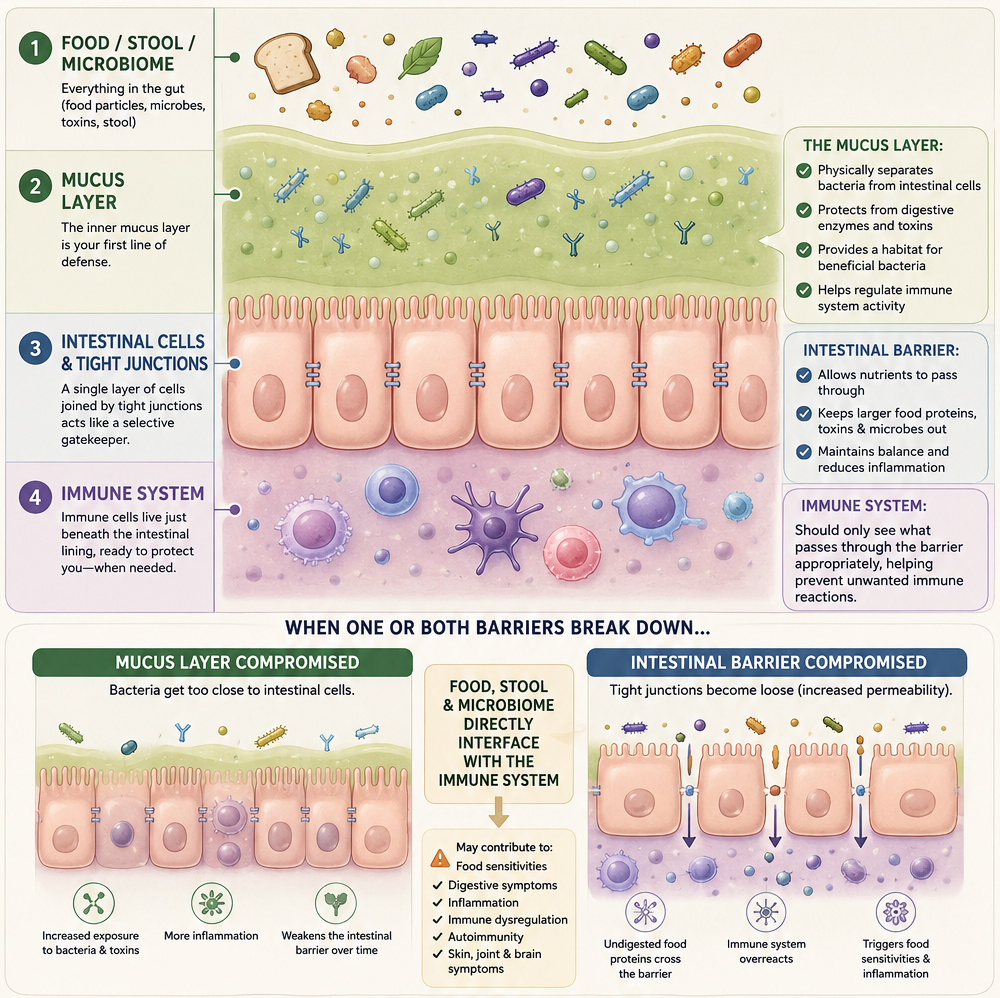
The Two Major Gut Barriers
Think of your intestinal lining as a castle wall with two layers of defence.
Barrier #1: The Mucus Layer
The first line of defence is a thick layer of mucus that coats the intestinal lining.
This mucus layer serves several important functions:
Physically separates bacteria from intestinal cells
Protects the gut lining from digestive enzymes and toxins
Provides a habitat for beneficial bacteria
Helps regulate immune system activity
Reduces direct contact between food, microbes, and intestinal tissue
A healthy mucus layer acts like a protective buffer between the outside world (food, microbes, stool) and the body's immune system (1).
Barrier #2: The Intestinal Epithelial Barrier
Beneath the mucus layer lies a single layer of intestinal cells joined together by structures called tight junctions (2).
These tight junctions function like gatekeepers, determining what can and cannot pass through the intestinal wall.
When functioning properly, nutrients are absorbed while larger food proteins, toxins, and microbes remain confined to the digestive tract.
What Is Intestinal Permeability?
Intestinal permeability refers to the ability of substances to move across the intestinal wall.
Some permeability is normal and necessary for nutrient absorption. Problems arise when permeability becomes excessive.
When tight junctions become disrupted, larger particles may pass through the intestinal barrier more easily than intended. This process is commonly referred to as "leaky gut."
Potential contributors to increased intestinal permeability include (3):
Chronic stress
Poor sleep
Alcohol
Certain medications (particularly NSAIDs)
Acute and chronic infections
Inflammatory bowel disease (e.g., ulcerative colitis and Crohn’s disease)
Celiac disease
Metabolic dysfunction and insulin resistance
Nutrient deficiencies
A diet high in processed foods
As permeability increases, the immune system may become exposed to substances it would not normally encounter.
The Overlooked Barrier: The Intestinal Mucus Layer
While intestinal permeability receives significant attention, many people are unaware that dysfunction often begins before the epithelial barrier itself becomes damaged.
The mucus layer is continuously produced and maintained through interactions between intestinal cells and beneficial microbes (4).
When the mucus layer becomes thin, damaged, or depleted:
Bacteria can move closer to the intestinal lining
The immune system is exposed to microbial products
Inflammation may increase
The intestinal lining becomes more vulnerable to injury
Barrier dysfunction can worsen over time
In many cases, a compromised mucus layer may precede increased intestinal permeability.
The Role of Keystone Bacteria
Certain beneficial microbes play a critical role in maintaining the mucus barrier. These organisms are often referred to as "keystone species" because they have a disproportionately large impact on gut health (5).
Examples include:
Akkermansia muciniphila
Faecalibacterium prausnitzii
Roseburia species
Various Bifidobacterium species
These organisms help:
Support mucus production
Produce short-chain fatty acids such as butyrate
Regulate inflammation
Strengthen intestinal barrier integrity
Support immune tolerance
When levels of these beneficial microbes decline, the mucus barrier may weaken, increasing susceptibility to inflammation and barrier dysfunction.
What Happens When These Barriers Break Down?
Whether the mucus layer, the intestinal lining, or both become compromised, the result is increased interaction between intestinal contents and the immune system.
This can expose the immune system to:
Undigested food proteins
Bacterial fragments
Microbial toxins
Inflammatory compounds
In susceptible individuals, this may contribute to:
Food sensitivities
Bloating and digestive symptoms
Altered bowel habits
Increased inflammation
Immune dysregulation and the development of autoimmunity
Skin conditions (e.g., eczema, psoriasis)
Joint pain
Fatigue
Brain fog
Importantly, intestinal permeability is not considered a diagnosis itself. Rather, it is often viewed as an underlying physiological process that may contribute to a variety of health concerns.
Symptoms Associated with Gut Barrier Dysfunction
Symptoms vary significantly from person to person but may include (5):
Digestive Symptoms
Bloating
Gas
Abdominal discomfort
Diarrhea
Constipation
IBS-like symptoms
Food intolerances
Immune and Inflammatory Symptoms
Food sensitivities
Seasonal allergies
Autoimmune conditions
Frequent infections
Systemic Symptoms
Fatigue
Brain fog
Headaches
Skin concerns
Joint pain
While these symptoms do not confirm intestinal permeability, they may warrant further investigation into gut health.
Testing Options
No single test perfectly evaluates gut barrier function, but several tools can provide useful clinical information (6).
Comprehensive Stool Testing
Advanced stool testing may assess:
Microbial diversity
Beneficial bacterial populations
Butyrate-producing organisms and levels of short-chain fatty acids
Inflammatory markers
Digestive function
Secretory IgA
These findings can provide insight into the health of the mucus barrier and microbial balance.
Zonulin
Zonulin is a protein involved in regulating tight junctions (7).
Elevated levels may suggest increased intestinal permeability, though interpretation remains controversial and should be considered alongside the broader clinical picture.
Intestinal Permeability Testing
Some specialized laboratories offer permeability testing using non-metabolized sugar probes to evaluate intestinal barrier function.
Additional Laboratory Assessment
Depending on symptoms, assessment may include:
Celiac screening
Nutrient status (e.g., iron status, vitamin D, B12)
Inflammatory markers
Blood sugar and insulin markers
Food intake and dietary patterns
How to Support Both Gut Barriers
Successful gut repair involves addressing both the intestinal lining and the protective mucus layer.
1. Increase Dietary Fibre Intake
Fibre (especially soluble fibre) serves as fuel for beneficial gut microbes.
Focus on:
Vegetables
Fruit
Legumes
Nuts and seeds
Whole grains (when tolerated)
2. Feed Keystone Bacteria
Beneficial microbes thrive on fermentable fibres and polyphenols (8).
Examples include:
Pomegranate
Berries
Green tea
Cocoa
Flaxseed
Legumes
Onions
Garlic
Leeks
Jerusalem artichokes
3. Increase Butyrate Production
Butyrate is a short-chain fatty acid that supports both mucus production and intestinal barrier integrity.
Strategies include:
Resistant starch (e.g., cooked and cooled grains/potatoes, green bananas)
Soluble fibre
Diverse plant foods
Targeted probiotic therapy when appropriate
4. Address Chronic Stress
Stress can directly increase intestinal permeability through effects on the nervous and immune systems and on inflammatory pathways.
Prioritizing stress management is often a key component of gut healing.
5. Optimize Sleep
Poor sleep is associated with increased inflammation, impaired gut barrier function, and alterations in the gut microbiome.
Consistent, restorative sleep supports both immune regulation and intestinal repair.
6. Treat Underlying Drivers
Long-term success often requires identifying and addressing factors contributing to barrier dysfunction, including:
Dysbiosis
Chronic infections
Food triggers
Inflammatory bowel disease
Celiac disease
Metabolic dysfunction
Medication effects
7. Consider Targeted Gut-Healing Nutrients
Depending on the individual, supportive therapies may include:
L-glutamine and N-acetylglucosamine (9)
Zinc carnosine
Omega-3 fatty acids and fat-soluble vitamins
Butyrate
Specific probiotics
Demulcent herbs
Polyphenol-rich foods
These interventions should be individualized based on symptoms, history, and testing findings.
Key Takeaways
When people think about gut health, they often focus exclusively on intestinal permeability. However, the gut actually relies on multiple layers of protection.
The mucus layer serves as the first line of defence, while the intestinal lining forms a second protective barrier. Together, these structures separate food, microbes, toxins, and stool from the immune system.
When either barrier is compromised, the immune system may encounter substances it was never meant to encounter, potentially contributing to inflammation, digestive symptoms, and food sensitivities.
Supporting gut health, therefore, requires more than simply "healing leaky gut." It involves restoring the entire gut ecosystem—including the beneficial microbes that help maintain the mucus barrier itself.
Dr. Megan Woroch, ND, is a Toronto-based naturopathic doctor with a focus on digestive health, immune and environmental health, and root-cause approaches to chronic health concerns. She uses evidence-informed naturopathic medicine, clinical nutrition, functional testing, and individualized supplementation to support her patients.
Learn more about a naturopathic approach to digestive health.
Disclaimer: This information is for educational purposes only and is not intended to provide or replace medical advice, diagnosis, or treatment. Always consult your qualified healthcare provider for individualized recommendations.